Driver Monitoring Systems for Fleets: 2026 Buyer's White Paper
Sep 28,2026
FLEET SAFETY WHITE PAPER · SEPTEMBER 2026
A procurement framework for comparing managed platforms, DMS hardware and aftermarket systems.
Research date: 28 September 2026Scope: 10 vendor systemsMethod: Qualitative review of cited public product information
Executive summary
There is no single driver monitoring system that fits every fleet. The main purchasing decision is often whether to buy a managed safety platform with coaching and reporting, or detection hardware that must be integrated with a platform the fleet already owns. This paper compares ten options by deployment model and operational fit; it does not present an overall performance ranking or independent laboratory test.
Match the system model to your fleet scale, existing telematics, data ownership and internal support capacity.
Separate EU vehicle type-approval requirements from aftermarket retrofit decisions, and do not treat the U.S. impairment-prevention rulemaking as a general fleet DMS mandate.
Before rollout, test alert quality with representative drivers and routes, document privacy controls, confirm export rights, and compare five-year total cost of ownership.
AI-generated illustrative freight scene; it does not show a tested DMS installation or an AlwayCare customer deployment.
A regional carrier with 40 vehicles, a national operator with thousands of vehicles, and an OEM seeking white-label hardware may need very different systems. A single overall ranking can hide important differences between software platforms and camera components. This paper groups options by buying context so readers can shortlist products against their own requirements.
Editorial disclosure
AlwayCare publishes this paper and manufactures DMS hardware; its product is included as option F. We describe the same strengths and limitations for AlwayCare as for the other vendors, including situations where a different model may fit better. No third-party vendor paid for inclusion or placement. Product descriptions are based on the public vendor pages linked in each entry; this is a qualitative comparison, not an independent performance test. Confirm current availability, specifications and regional configurations with each supplier before procurement.
2026 regulatory context: what fleet buyers need to know
Two separate policy discussions are often blended together in DMS sales claims: EU vehicle type-approval rules for drowsiness and distraction warnings, and U.S. rulemaking on impaired-driving prevention. Neither should be presented as a universal retrofit requirement for every fleet.
European Union: DDAW and ADDW on covered new vehicles
Regulation (EU) 2019/2144, the General Safety Regulation, sets requirements for driver drowsiness and attention warning (DDAW) and advanced driver distraction warning (ADDW) systems on covered M- and N-category vehicles. For the standard vehicle categories in scope, the phase-in dates are:
DDAW — required for new vehicle types from 6 July 2022, and for new vehicle registrations from 7 July 2024.
ADDW — required for new vehicle types from 7 July 2024, and for new registrations from 7 July 2026.
The type-approval framework includes exceptions and separate transition dates for some vehicle classes. In 2026, EU Delegated Regulation 2026/1188 updated dates for certain small-series and special-purpose vehicle approvals, including ADDW registration deadlines extending to 7 July 2028 in affected cases. Check the exact vehicle category and approval route with the homologation authority or vehicle manufacturer.
The detailed ADDW requirements describe driver-gaze monitoring in defined areas and the warnings the system must provide. They do not prescribe one universal sensor design or require every system to use an infrared camera. A vehicle manufacturer may use camera data, but fleets should distinguish the approved in-vehicle system from broader aftermarket DMS products with additional detection functions. EU rules also limit unnecessary continuous recording and retention by type-approved DDAW and ADDW systems; those provisions do not replace a fleet's separate privacy review for retrofit equipment.
AI-generated illustrative cab scene; it does not depict a DMS camera or monitoring result.
What this means for an existing fleet
The GSR dates govern vehicle approval and registration. They do not, by themselves, create a general EU requirement to retrofit every truck or bus already in service with an aftermarket DMS. Separate national rules, operating duties, insurance conditions or customer contracts may still apply. Evaluate those obligations for the relevant market rather than relying on a vendor's broad compliance claim.
United States: impairment-prevention rulemaking is not a 2027 fleet DMS mandate
Section 24220 of the Infrastructure Investment and Jobs Act directs NHTSA to develop a Federal Motor Vehicle Safety Standard for advanced drunk and impaired driving prevention technology in new passenger motor vehicles. The statutory definition includes passive monitoring of driver performance to identify possible impairment and prevent or limit vehicle operation. That purpose is distinct from a general fleet requirement for fatigue- or distraction-warning cameras, although NHTSA's 2026 report discusses camera-based DMS as one approach under study.
The statute set an initial rulemaking timeline and allows an extension of up to three years if the required safety-standard criteria cannot be met. NHTSA's February 2026 report to Congress describes continuing work on technology readiness, objective test procedures, false-positive risks, privacy and consumer acceptance. It does not establish a final standard or an effective date for a 2027 fleet DMS requirement. The commonly repeated "2027 U.S. DMS mandate" therefore overstates what the current rulemaking establishes.
For fleet retrofit decisions, evaluate insurer programs, customer and tender terms, duty-of-care procedures, operating risks and incident history. Treat any statutory-compliance claim as a request for the exact rule, vehicle scope and effective date.
Each system was assessed qualitatively against eight criteria that affect a purchasing decision:
Detection depth - which driver states it reports, and whether it uses IR pupil/eye tracking or coarser head-pose heuristics
Deployment model - standalone device, integrated with an existing MDVR, or part of a software platform
Fleet scale fit - from single vehicle to thousands
Integration and ownership - can you get the data out, and do you own the platform layer
Regional requirements — vehicle approval rules, privacy obligations and operating duties that apply in the target market
Privacy controls - off-duty modes, local processing, retention settings
Commercial model - one-time hardware capex vs per-vehicle subscription
Support and warranty - who fixes it, and how fast
The systems are not ranked from best to worst. Comparing a managed platform with a component camera in one overall score would not be meaningful. Letter markers identify entries for reference only; they do not indicate rank. Each entry instead describes an operating situation where the model may fit, along with considerations that could make it a poor fit.
System comparison at a glance
System
Best for
Model
Platform included?
Commercial shape
Samsara
One vendor for video + telematics + compliance
Managed platform
Yes
Hardware + per-vehicle subscription
Motive
North American trucking, fast rollout
Managed platform
Yes
Hardware + per-vehicle subscription
Lytx
Large fleets running a formal safety programme
Managed platform
Yes
Programme / subscription
Verizon Connect
Fleets already on Verizon Connect telematics
Managed platform
Yes
Subscription
Geotab
Fleets already on MyGeotab
Platform ecosystem
Yes (via resellers)
Via Geotab reseller network
AlwayCare
OEM/ODM sourcing, white-label, own platform
Hardware + firmware
No - you bring or buy yours
One-time hardware, no device subscription
Howen
Hardware plus a vendor platform, mid-market
Hardware + own platform
Yes (VSS)
Hardware + platform
Stonkam
Mixed sensor stacks from one manufacturer
Component + system
Yes (AI MDVR)
Hardware, OEM options
BlackVue (Pittasoft)
Owner-operators and small fleets, self-install
Aftermarket device
Optional cloud
Retail / low-volume
Fleetclear
UK and EU fleets with privacy obligations
Hardware + platform
Yes
Hardware + subscription
Managed fleet safety platforms
These are subscription platforms where the camera is one part of a larger system. Choose from this tier if you want one vendor to deliver video, telematics, driver scoring, coaching workflows and compliance reporting out of the box - and you are comfortable paying per vehicle, per month, indefinitely.
A
Samsara — best when one vendor must cover video, telematics and compliance
Platform
The broadest single-vendor platform for fleets that want video, telematics and compliance in one place.
Samsara sells AI dash cams as part of an integrated operations platform spanning safety, telematics, equipment and compliance. It is the reference point most large fleets benchmark against, and its camera line is positioned around in-cab AI alerts plus automated coaching rather than hardware alone.
Strengths
Very wide platform surface - cameras, gateways, compliance and reporting in one contract
Mature in-cab alerting and driver coaching workflow
Publishes customer outcome data and third-party integrations
Strong fit for multi-site operations needing consolidated reporting
Consider carefully if
You want to own the platform layer or white-label it - you cannot
You only need DMS hardware; you will be buying a platform
Your budget model is capex rather than recurring opex
Best for: mid-size to large fleets that want a single vendor and a single invoice for video safety and telematics.
B
Motive - best for fast rollout in North American trucking
Platform
AI Dashcam Plus with an emphasis on quick deployment and hands-free driver communication.
Motive combines an AI dash cam with compliance and fleet management in one device, and is particularly established with North American carriers. Its pitch centres on deployment speed and on the camera as a single unified unit rather than a multi-box install.
Strengths
Strong North American compliance and regulatory coverage
Single unified device simplifies installation
Good mid-market onboarding path
Two-way driver communication built in
Consider carefully if
You operate primarily outside North America
You need white-label hardware or firmware access
You want to integrate the camera into a third-party platform
Recurring per-vehicle cost does not fit your model
Best for: North American trucking and logistics fleets that want dashcams and compliance in a single device.
C
Lytx - best for large fleets running a formal safety programme
Platform
A video safety specialist with distinct products for direct fleets, bundled telematics and resellers.
Lytx has one of the more clearly segmented product lines in the category: a Driver Safety Program, LytxOne for combined video and fleet management, Lytx+ for video safety integrated with Geotab telematics, a Compliance Services offering, and Surfsight, which is sold exclusively through resellers. Hardware families include DriveCam SF-Series and Surfsight AI-Series cameras.
Strengths
Long track record specifically in video-based driver risk
Clear product segmentation - you can pick video-only or bundled telematics
Reseller channel (Surfsight) if you want to distribute rather than operate
Structured coaching and compliance services
Consider carefully if
You are a very small fleet - this is oriented toward programmes, not self-serve
You want to buy hardware outright without a service layer
You need OEM firmware or white-label branding - use the reseller route instead
Regional coverage outside North America and Europe
Best for: large fleets and insurers running a structured, managed safety programme with coaching accountability.
D
Verizon Connect - best if you already run their telematics
Platform
AI dashcams that slot into an existing Verizon Connect fleet stack.
Verizon Connect markets an AI dashcam around in-cab alerts, driver coaching with video evidence, and claims defence, positioned as an extension of its wider fleet management platform. It publishes customer case material around claim deflection and insurance discussions.
Strengths
Straightforward addition if you are already a Verizon Connect customer
Strong emphasis on video evidence for claims and liability
Integrated view of vehicles, drivers and safety events
Documented onboarding process
Consider carefully if
You are not in their telematics ecosystem - the value drops sharply
You need OEM or white-label hardware
You require deep custom integration with a non-Verizon platform
Best for: fleets already standardised on Verizon Connect telematics who want cameras in the same pane of glass.
E
Geotab - best if you already run MyGeotab
Ecosystem
AI dash cams native to the largest open telematics marketplace.
Geotab's GO Focus AI dash cam family integrates directly with MyGeotab, so video events and driver data land in the same system you already use for telematics. The distinguishing feature is ecosystem openness: Geotab's marketplace model means you buy through a reseller network and can combine vendors rather than being locked to one.
Strengths
Deep integration with an existing telematics deployment
Open marketplace approach - less single-vendor lock-in
Video evidence and in-cab coaching within one platform
Wide reseller and integrator ecosystem
Consider carefully if
You are not a Geotab customer - you would be adopting a platform to get the camera
You want to buy direct rather than through a reseller
You need branded hardware for resale
You want a single vendor accountable for everything
Best for: fleets standardised on Geotab that want camera coverage without adding a second platform.
DMS hardware and OEM/ODM suppliers
Choose from this tier if you already have a platform, are building one, or want to buy hardware without a recurring per-vehicle software fee. This is where the economics change: you pay once for the device, and the platform question becomes yours to answer.
F
AlwayCare - best for OEM/ODM sourcing and white-label DMS hardware
OursHardware
A 25-year automotive-grade DMS manufacturer: you buy the device and firmware, not a subscription.
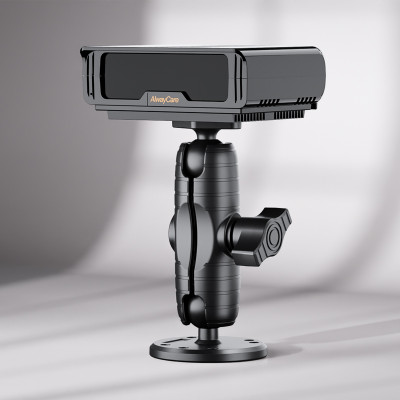
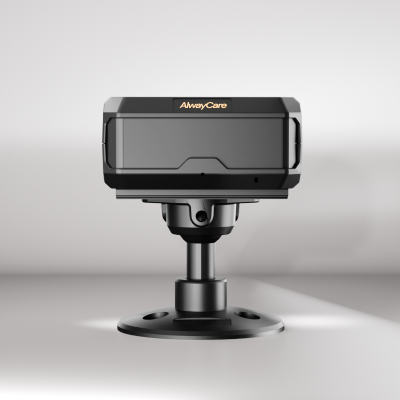
AlwayCare is a source manufacturer of commercial fleet safety hardware - DMS, ADAS, BSD, 360-degree around-view, AI dashcams, radar and passenger counting. The DMS line is built to work either as a standalone unit or integrated into an existing MDVR, and the company's current range covers four distinct deployment shapes:
MR688B - standalone DMS for real-time fatigue and unsafe-behaviour alerts; runs offline on its own or integrates with MDVR systems. Patented infrared pupil tracking, multi-stage alerts.
MR810 - standalone DMS for bus and coach operations, with 12 core DMS alarms grouped into drowsiness/fatigue, distraction/habits, compliance/identity and anti-tampering/sensor integrity.
MR830 - all-in-one DMS with optional ADAS and BSD, 14 DSM alarms and 4 ADAS warning modes, 4G/GPS/Wi-Fi, up to 512 GB local event storage.
MR910-D - DMS combined with a 5-channel mobile DVR, dual SD card storage up to 1 TB, with telematics cloud integration and support for ADAS and BSD camera add-ons.
Strengths
One-time hardware cost - no per-vehicle device subscription
Genuine OEM/ODM capability: firmware customisation, your branding, your protocols
Standalone or MDVR-integrated, so you are not forced into a platform
IATF 16949 and ISO 9001 certified manufacturing; CE, UKCA, RED, RoHS, WEEE compliance
Deploys as component hardware alongside ADAS, BSD and radar from the same source
15-month warranty and factory-direct technical support
Consider carefully if
You want a fully managed programme out of the box. There is no turnkey driver-coaching SaaS included. If you want a vendor to run the safety programme for you, choose a Tier 1 platform instead - that is genuinely not what we sell.
You want to buy a single unit at retail with self-install. Talk to a Tier 3 aftermarket vendor.
You cannot support an integration or deployment project - this is a build-and-integrate purchase, not a plug-and-play subscription.
You need coverage of every vehicle type in one SKU; the range is deliberately segmented by vehicle profile.
Commercial model
One-time hardware purchase; volume pricing for OEM/ODM
Platform included
No - standalone, or integrate with your existing MDVR/telematics platform
Best for: distributors and resellers who want their own DMS brand, vehicle manufacturers and integrators embedding DMS, and fleet operators who already run a telematics platform and want to add detection hardware without a second subscription. Not for anyone wanting a managed safety programme delivered as a service.
G
Howen - best hardware-plus-platform balance in the mid-market
Hardware
AI Dashcam V3 with dual-lens DMS and ADAS, plus the vendor's own VSS platform.
Howen's AI Dashcam V3 is an all-in-one unit combining AI DMS and ADAS in a dual-lens design, with 4G/Wi-Fi/GPS connectivity, up to 512 GB storage, panic button, G-sensor, OBD power plug-and-play and two-way talk. Notably, Howen also publishes a VSS platform, FMS integration and an install tool (iTool), so the integration story is more complete than most hardware-only vendors.
Strengths
DMS and ADAS in one dual-lens device
Own platform (VSS) plus FMS integration options
Install tooling and mobile app for deployment at scale
Widely documented use-case coverage
Consider carefully if
You need deep white-label firmware customisation
You want to run on a third-party platform only - check integration depth first
You need published per-alarm detection detail comparable to a dedicated DMS vendor
You need a large regulated-industry certification pack upfront
Best for: fleets wanting an integrated camera-plus-platform option without committing to a large enterprise vendor.
H
Stonkam - best when you need a mixed sensor stack from one manufacturer
Hardware
A very broad vehicle-sensor catalogue with DMS as one component among many.
Stonkam's FHD831 is a 1080P HD DMS camera designed to work with the company's Intelligent MDVR systems to monitor fatigue, distraction and other driving behaviour. The wider catalogue is the real story: DMS, ADAS, BSD, thermal, APC, AHD/CVBS, IP and automotive Ethernet cameras, ultrasonic and millimetre-wave radar, LiDAR, AI MDVR, AI dashcam, and both forklift and universal management platforms - plus an explicitly compliance-organised product view and OEM solutions.
Strengths
Unusually broad sensor and camera portfolio from a single source
Products organised by compliance category
Strong fit for projects mixing DMS with radar, LiDAR and perimeter sensing
OEM solutions offered
Consider carefully if
You want a DMS-only standalone device - the camera is a component of their MDVR system
Best for: projects that need DMS alongside other sensing types, sourced from one manufacturer.
Aftermarket and regional systems
These are not fleet platforms. They solve narrower problems well, and they are often the right answer for owner-operators, small fleets and specific regulatory environments.
I
BlackVue (Pittasoft) - best self-install aftermarket DMS
Aftermarket
Retail-available dashcams with a DMS truck variant and an optional fleet programme.
BlackVue's DR770X Box-3CH DMS Truck Pro brings a driver-facing DMS channel into a retail dashcam package, and the brand also offers FLEET service and plan tiers with cloud connectivity. The appeal is straightforward: you can buy it, install it and run it without a fleet contract.
Strengths
Available at retail - no procurement cycle, no minimum volume
Self-install friendly with broad accessory ecosystem
Cloud and fleet plan options if you grow into them
Strong consumer brand recognition, which can help driver acceptance
Consider carefully if
You manage more than a handful of vehicles - fleet reporting depth is limited
You need formal compliance evidence or audit reporting
You need OEM branding or firmware control
You require heavy-duty, high-vibration certified installation
Best for: owner-operators and small fleets that want a capable DMS unit without a platform commitment.
J
Fleetclear - best for UK and EU fleets with privacy obligations
Regional
A DMS built around privacy controls and configurable alert thresholds.
Fleetclear's DMS monitors drowsiness, distraction, phone use and seatbelt status with in-cab alerts and recorded events, running either on a standalone dashcam or on the customer's existing Fleetclear DVR. What distinguishes it is the privacy handling: configurable alert thresholds and an explicit privacy mode for off-duty hours.
Strengths
Privacy mode for off-duty periods - directly relevant to UK/EU GDPR and works-council discussions
Configurable alert thresholds rather than fixed factory rules
Best for: UK and European operators where driver consent and privacy are central to getting deployment approved.
Other systems to validate
Vantrue, Smart Eye, Safe Fleet, SambaSafety, Linxup, AUTOsist and GPSTab may also merit review depending on vehicle type, region and the fleet's existing platform. Their product scope and DMS functions vary by model and market; this paper does not score them. Confirm current product documentation and support coverage before adding any of them to a shortlist.
AI-generated illustrative logistics yard; not a vendor facility or customer case study.
Fleet procurement sequence
Work through these five questions in order. Your answers identify the operating model to shortlist; they do not replace a vehicle-level pilot or a commercial review.
Do you want a vendor to run the safety programme, including driver coaching workflow and reporting? If yes, buy from Tier 1. Do not try to assemble this yourself.
Do you already have a telematics or video platform you intend to keep? If yes, go to Tier 2 - buy detection hardware and integrate. Geotab and Lytx's reseller route also work here.
Are you a distributor, reseller or vehicle manufacturer who needs your own brand? If yes, you need an OEM/ODM manufacturer in Tier 2.
Are you buying for one to five vehicles and want to self-install? If yes, Tier 3 aftermarket is the efficient answer.
Is driver privacy or works-council approval the main obstacle? If yes, prioritise vendors with documented privacy modes and configurable retention, regardless of tier.
Then apply the commercial filter, which is where most budget models break: Tier 1 spreads cost over time as operating expenditure, Tier 2 concentrates it up front as capital expenditure. A fleet adding DMS to 200 vehicles should model both over a five-year horizon, including the internal cost of running a platform if you go the Tier 2 route. Fleets routinely underestimate that second number.
Claims to verify before purchase
"The 2027 U.S. mandate requires this fleet DMS." Ask for the exact rule and vehicle scope. IIJA Section 24220 concerns impaired-driving-prevention technology for passenger motor vehicles; it is not a blanket commercial-fleet fatigue or distraction camera requirement.
"Our DMS proves the driver was asleep." No camera-based DMS proves that. It detects patterns consistent with drowsiness and captures an event; it cannot establish a driver's internal state. Any vendor claiming otherwise is setting you up for a dispute you will lose.
Alarm-count inflation. "14 alarms" is not inherently better than "8 alarms". Ask which ones matter for your operation and how many false positives each generates per 1,000 km.
No privacy controls. If there is no off-duty mode, configurable retention or local-processing option, you will struggle to get driver consent - and in Europe you may struggle with lawfulness.
No path to your own data. Ask explicitly how you export events, and whether you keep access if you stop paying.
Hardware-only vendors claiming platform capability. Ask for the actual coaching workflow and reporting screens before you commit.
No false-positive testing offer. Serious vendors will let you trial units and measure alert quality. If they will not, that is your answer.
Frequently asked questions
What is the best driver monitoring system for fleets?
There is no single best product because the category includes managed subscription platforms (Samsara, Motive, Lytx, Verizon Connect and Geotab) as well as hardware that fleets integrate themselves (AlwayCare, Howen and Stonkam). Choose a managed platform if you want an included coaching and reporting workflow. Consider hardware if you already operate a platform, need an OEM/ODM arrangement, or prefer to manage integration internally. Match the deployment model to your operation before comparing individual functions.
Are driver monitoring systems required by law?
It depends on the jurisdiction, vehicle category and approval route. In the EU, Regulation (EU) 2019/2144 phases DDAW and ADDW requirements into type approval and new registrations for covered vehicles; certain small-series and special-purpose approvals have separate dates. These rules do not by themselves create a general retrofit requirement for existing fleet vehicles. In the United States, IIJA Section 24220 directs NHTSA to develop an impaired-driving-prevention safety standard for new passenger vehicles. NHTSA's February 2026 report describes continuing research and does not set a general fleet DMS effective date. Check the current rules for each market and vehicle class before making a compliance decision.
Do I have to retrofit driver monitoring into my existing trucks and buses?
The EU General Safety Regulation's DDAW and ADDW phase-in dates apply to vehicle approval and registration; they do not, by themselves, require operators to retrofit every vehicle already in service. Separate national or sector-specific duties may still apply. A retrofit decision may also reflect insurer conditions, customer or tender requirements, internal safety procedures or incident history. Ask a vendor to identify the precise legal provision if compliance is given as the reason to retrofit.
How much does a fleet DMS cost?
Cost splits into two very different models. Managed platforms charge for hardware plus an ongoing per-vehicle subscription, so total cost scales with fleet size and contract length. Hardware-integration vendors charge once per device with no per-vehicle device fee, but you carry the cost of the platform, integration and deployment. The right comparison is not sticker price - it is five-year total cost of ownership including internal platform effort on the hardware route. Ask every vendor for pricing at your actual vehicle count rather than list pricing.
What should a driver monitoring system actually detect?
A useful baseline is drowsiness and micro-sleep indicators, distraction and gaze-away events, mobile phone use, smoking, and seatbelt status. More capable systems add driver identity verification, anti-tampering and sensor-integrity checks, and configurable multi-stage alerting. What matters more than the raw count is false-positive rate and whether the alerts are actionable for coaching - a system that cries wolf gets switched off by drivers, and a disabled system detects nothing.
What is the difference between a DMS, ADAS and an AI dashcam?
A DMS looks inward at the driver: it monitors fatigue, distraction, phone use and similar states. ADAS looks outward at the road and warns about forward collision, lane departure and pedestrian risk. An AI dashcam is a camera that applies computer vision to either or both directions and usually adds recording and connectivity. Many modern products bundle all three in one device, which is convenient but makes like-for-like comparison harder - always check which detection functions are actually included versus optional.
How do I introduce DMS without driver backlash?
Four things consistently work: be transparent about what the system does and does not record; involve drivers and any works council before deployment rather than after; configure privacy controls so off-duty time is genuinely excluded; and use the data for coaching and support rather than purely for discipline. Frame the purpose as protecting drivers from false claims and fatigue-related risk, and publish how long footage is retained. In Europe, also confirm your lawful basis for processing before you install anything.
Research scope and update note
This comparison summarizes the vendor product pages cited in each entry and was prepared for AlwayCare's fleet-safety audience. It is not a controlled test, a complete market census, legal advice or a substitute for confirming current configurations with suppliers. Regulatory details were checked against the EU legal texts and NHTSA's February 2026 report to Congress. Review date: 28 September 2026.