
- Tag Filter
- Problem Solving
- Collision Avoidance
- Blind Spot Monitoring
- Anti-fatigue
- Scenarios
- Vehicle Manufacturers
- Mining Fleets
- Logistics and Transportation
- Hazardous Chemicals Fleets
- School Bus Fleets
- Public Bus Fleets
- Forklift Fleets
- Insurance
- Government and Public Safety
- Business Attributes
- Customized
- Hot Sale
- New Product
- Fast Delivery
DMS (Driver Monitoring System)
Commercial Fleet Driver Monitoring Systems (DMS)
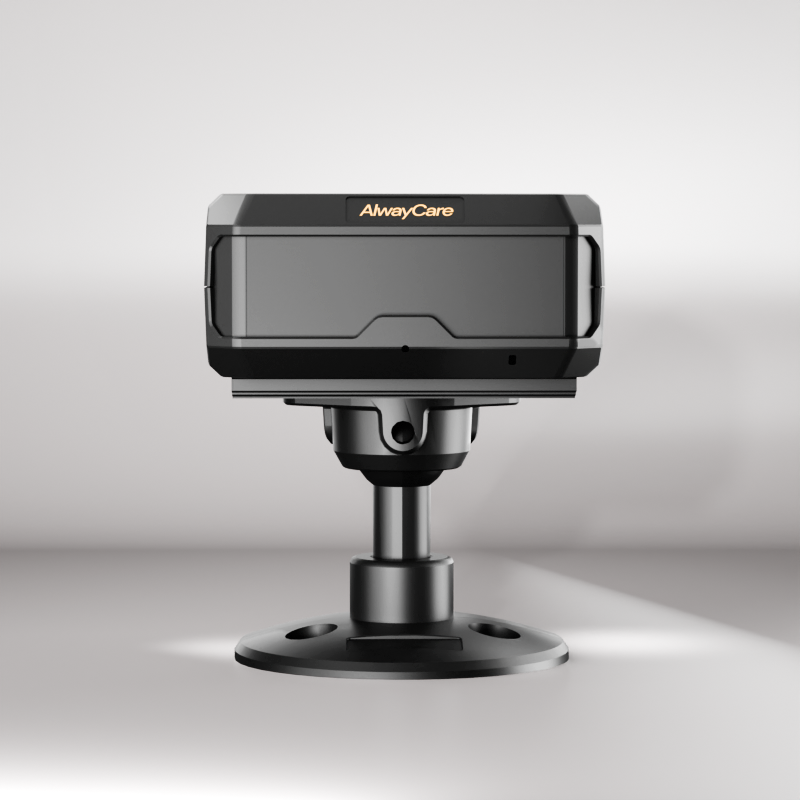
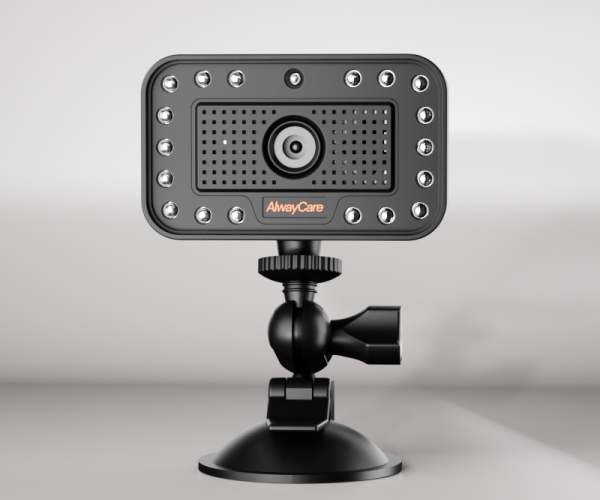
A commercial fleet driver monitoring system (DMS) is an active in-cab safety solution that uses vision-based artificial intelligence to detect driver fatigue, micro-sleep, mobile phone use, and distraction in real time. Engineered for heavy trucks, passenger buses, and commercial transport, AlwayCare DMS hardware delivers proactive acoustic warnings and telematics evidence to protect drivers and commercial fleet assets.
What Is a Driver Monitoring System (DMS)?
Understanding optical cabin tracking, edge AI inference, and how proactive driver-state intervention differs fundamentally from passive video recording.
A driver monitoring system (DMS) is an intelligent in-cabin vision system that continuously evaluates driver alertness, head orientation, gaze direction, and behavioral gestures while a commercial vehicle is in motion. By directing an automotive-grade optical sensor at the operator's face, the system captures micro-expressions, eyelid closure velocity, and cognitive distraction indicators.
Unlike conventional fleet dashcams that passively capture forward-road footage for retrospective claims investigations, an active DMS operates as a preventative safety co-pilot. The embedded neural processing unit (NPU) analyzes video streams locally in fractions of a second, emitting instant spoken or acoustic alarms inside the cabin to alert the driver before an attention deficit leads to a dangerous collision or lane departure.
1. Active Optical Sensing
Integrated 940nm non-visible infrared LEDs illuminate the driver's face without producing distracting glare or eye fatigue. The high-sensitivity sensor maintains consistent tracking through pitch darkness, tunnel entrances, direct low-angle sun, and dark polarized sunglasses.
2. On-Device Edge AI Inference
Embedded deep-learning algorithms extract 68+ facial landmarks in real time. The neural network computes PERCLOS (Percentage of Eye Closure), blink duration, head yaw/pitch angles, and hand-to-face gestures with sub-second latency, independent of cellular connectivity.
3. Instant In-Cab Audible Alerts
When unsafe thresholds are exceeded (such as eyes closed for over 1.5 seconds or sustained gaze diversion), high-output acoustic alerts and multi-language voice prompts immediately command the driver's focus back to the road.
4. Telematics & Cloud Telemetry
Via 4G LTE or serial integration with on-board MDVRs/AVL trackers, safety events generate compressed 15-second video clips and metadata. Dispatchers receive real-time notifications on AlwayCare CMSV6 or custom fleet platforms for risk management and targeted coaching.
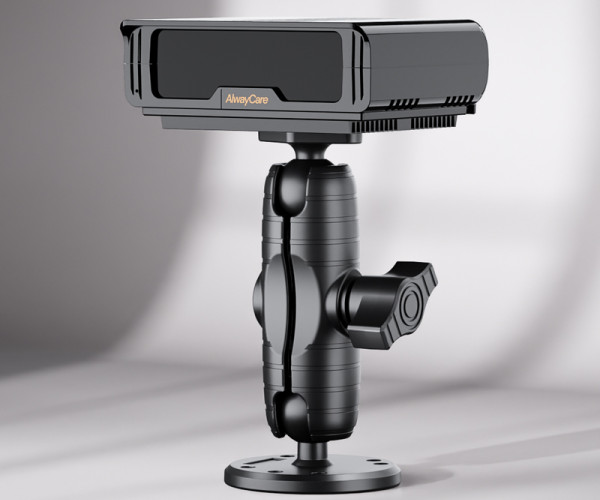
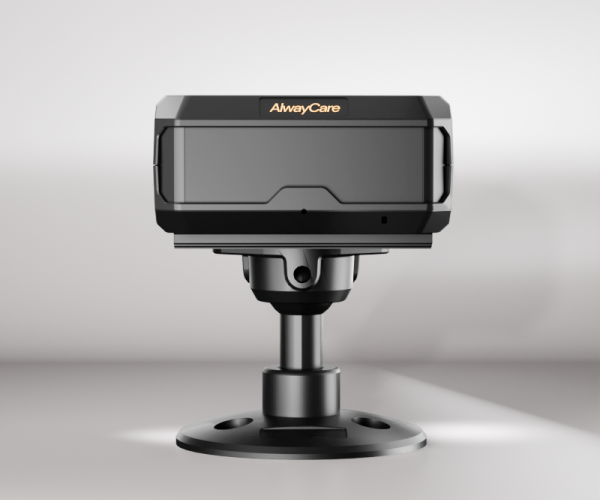
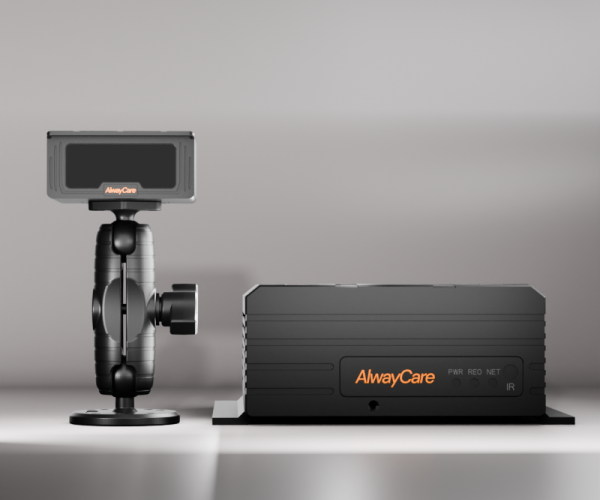
Review our specialized standalone cameras, transit-focused sensors, and integrated video telematics terminals below, followed by detailed capability breakdowns, regulatory standards, and deployment guides.
Critical In-Cab Behaviors and Risks a DMS Detects
Proactive deep neural network algorithms operating around the clock across direct sunlight, tunnel transitions, and sunglasses wearers.
Fatigue & Micro-Sleep
Continuously tracks PERCLOS (Percentage of Eye Closure) and head drooping patterns. Emits immediate multi-stage acoustic alarms before the driver drifts into involuntary micro-sleep.
Distraction & Looking Away
Monitors 3D head pose yaw and pitch. Alerts trigger when the driver looks away from the road ahead (toward mirrors, passengers, or center consoles) beyond safe calibrated intervals (2–3 seconds).
Mobile Phone Use
Recognizes handheld smartphone calling, texting, or continuous browsing while the vehicle is in motion, actively discouraging hazardous divided attention in commercial transit.
Smoking & Yawning
Identifies frequent yawning sequences and lit cigarettes, logging event timestamps to help fleet safety supervisors manage driver rest schedules and enforce strict cab safety policies.
Driver Absence & Occlusion
Alerts dispatch when the operator leaves the driver's seat while ignition is active, or when the camera lens is intentionally covered, blocked, or rotated away from nominal face tracking.
Seatbelt Compliance
Visual inspection algorithms verify whether the driver has properly buckled the three-point seatbelt prior to and during driving, promoting personal safety and corporate regulatory compliance.
Global Safety Regulations and Fleet Compliance Mandates
Navigating international commercial vehicle safety legislation, driver attentiveness mandates, and automotive electrical standards.
European Union GSR & ADDW Mandates
Under Regulation (EU) 2019/2144 and (EU) 2021/1341, Driver Drowsiness and Attention Warning (DDAW) and Advanced Driver Distraction Warning (ADDW) are mandatory across newly registered commercial trucks (N2, N3) and buses (M2, M3) from July 2024. Systems must directly track driver gaze and alert when distraction thresholds are breached.
- Mandatory direct eye/gaze tracking architecture
- Distraction alerts triggered within 3.5s at highway speeds
- Full compliance with strict EU GDPR privacy requirements
ISO 7637-2 & EN 50155 Standards
Commercial vehicle power lines experience intense load-dump surges, alternator ripple, and cranking drops. AlwayCare hardware adheres to ISO 7637-2 electrical disturbance protection (wide 9–36V DC range) and EN 50155 shock and vibration specifications for bus transit and heavy transport environments.
- 9–36V DC wide input with transient surge suppression
- Ignition delay power management prevents cutoffs
- Industrial anti-vibration locking aviation connectors
JT/T 883 & JT/T 1078 Protocol Standards
Commercial hazardous goods (hazmat) transports, intercity long-distance coaches, and heavy freight fleets require standardized DMS protocol output over RS232/CAN and 4G video streaming under JT/T 808 and JT/T 1078 protocols, enabling seamless sync with national and enterprise dispatch portals.
- Standard RS232 / CAN bus serial output
- CMSV6 cloud server integration & Open HTTP API
- Automated alarm snapshot and 15s video event upload
Fleet Insurance & Corporate Risk Governance
Leading commercial fleet underwriters provide substantial premium incentives (often 10%–25% savings) for operators deploying active video telematics and DMS. Corporate shippers also mandate verified fatigue risk controls as an essential prerequisite for logistics contract awards.
- Objective safety audit trails reduce liability exposure
- Faster claims resolution with synchronized event video
- Supports corporate ESG and driver duty-of-care programs
Vehicle Compatibility and Commercial Fleet Deployment Profiles
Tailored deployment architectures addressing duty cycles, optical environments, and operational risks across key transport sectors.
Long-Haul Freight Tractors
Monotonous highway routes and overnight driving produce acute circadian fatigue dips. AlwayCare DMS provides high-intensity 940nm infrared illumination to maintain tracking across deep windshields, alerting drivers to micro-sleep and transmitting risk logs to fleet dispatchers.
Intercity Coaches & Transit Buses
Passenger lives depend on continuous driver attentiveness in dense city traffic. Compact A-pillar mounted hardware (MR810) fits narrow window frames without obstructing driver sightlines, featuring fine-tuned mirror check filtering to prevent false alerts.
Fuel & Chemical Tanker Fleets
Carrying volatile payloads demands zero tolerance for in-cab smoking or mobile phone distraction. Real-time 4G cloud video evidence uploads provide auditable compliance records for fleet safety officers and regulatory authorities.
Off-Highway Heavy Haulers
Extreme airborne dust, high mechanical vibration, and 24/7 rotating shift work in quarries and open-pit mines. Ruggedized metal enclosures, locking aviation connectors, and wide temperature tolerance (-20°C to +70°C) ensure reliable uptime in harsh industrial environments.
Compare AlwayCare DMS Hardware Configurations
Side-by-side engineering evaluation across standalone driver monitoring cameras, all-in-one edge AI terminals, and multi-channel telematics recorders.
| Feature / Parameter |
MR688B
CLASSIC STANDALONE
Focused Fatigue Unit
|
MR810
TRANSIT OPTIMIZED
A-Pillar Bus & Coach DMS
|
MR830
ALL-IN-ONE ACTIVE
DMS + ADAS + BSD AI
|
MR910-D
HYBRID TELEMATICS
DMS + 5-CH MDVR Host
|
|---|---|---|---|---|
| Hardware Architecture Form factor & mounting | Standalone In-Cab Fatigue Camera | A-Pillar Mounted High-Resolution Sensor | Integrated Edge AI Console | 5-Channel Heavy-Duty MDVR Host |
| DMS Behavioral Detection Recognized safety violations | Drowsiness, Micro-Sleep, Distraction | Drowsiness, Yawn, Distraction, Phone, Smoking | Deep Neural DMS + Forward ADAS + Pedestrian BSD | Deep Neural DMS + Multi-Camera Evidence |
| Infrared Night Vision Cabin illumination wavelength | Invisible 940nm IR Array | High-Power 940nm Array | 940nm Non-Glare Adaptive IR | 940nm Cabin Sensor (Detached) |
| Video Recording Channels Simultaneous streams | Incident snapshot log | DMS channel logging | Multi-Stream AI Integration | 5 Full HD Channels (Road, Cab, Left, Right, Rear) |
| Telematics & Cloud Sync Network & protocols | RS232 Speed / Alarm Output | RS232 / CAN Bus Output | 4G LTE, GPS/BDS, CMSV6 Cloud | 4G LTE, Multi-GNSS, Wi-Fi, JT/T 808/1078 |
| Operating Voltage Vehicle input rating | 9–36V DC Commercial Input | 9–36V DC Commercial Input | 9–36V DC Transient Safe | 9–36V DC (ISO 7637-2 Industrial) |
| Target Fleet Profile Optimal deployment fit | Quick retrofit for freight trucks & utility fleets | Public transit buses, school buses, tour coaches | Heavy commercial logistics & hazardous tankers | Heavy haulers, multi-trailer trucks, municipal fleets |
| Product Record | View MR688B | View MR810 | View MR830 | View MR910-D |
Fleet DMS Total Cost of Ownership (TCO) and Cost Breakdown
Transparent breakdown of hardware CapEx, installation labor, cellular data budgets, and platform licensing to guide fleet procurement.
1. Hardware Acquisition Tiers
Hardware pricing scales with integration depth. Standalone warning units (MR688B) offer the lowest initial unit cost for direct cabin alerts. All-in-one consoles (MR830) eliminate the expense of purchasing separate forward ADAS and blind-spot BSD sensors, delivering higher overall capital efficiency.
2. In-Cab Installation & Labor
Standard automotive 3-wire harnesses (BATT+, ACC, GND) and plug-and-play bracket kits enable certified fleet technicians to complete installation and optical calibration in 45–90 minutes per vehicle, minimizing depot downtime and reducing outsourced labor costs.
3. Cellular Data & SIM Budget
On-device edge AI eliminates expensive 24/7 continuous video streaming. Connected terminals transmit only 15–30 second compressed event clips and JSON telemetry upon confirmed safety violations, maintaining typical monthly data consumption under 1–2 GB per commercial vehicle.
4. Zero Proprietary Lock-In
AlwayCare supports self-hosted CMSV6 cloud servers and standard JT/T 808/1078 protocols. Fleets can route telemetry directly into existing enterprise dispatch platforms without being forced into restrictive multi-year per-seat recurring subscription locks.
Return on Investment (ROI) Through Incident Prevention
Commercial fleet statistics show that fatigue and distraction cause over 40% of major highway freight collisions. Preventing a single severe rear-end accident or tanker rollover saves tens of thousands in direct vehicle repair, cargo damage, driver medical leave, and insurance claims — typically recovering the entire fleet DMS investment across the first year of deployment.
In-Cab Deployment Methods and System Integration Architecture
Standardized installation procedures, optical calibration, electrical isolation, and telematics protocol synchronization.
Optical Geometry & Camera Mounting
Mounted on the driver's side A-pillar (ideal for buses and high-cab freight tractors) or centered on the dashboard steering column (for delivery vans). Standard 60–80 cm distance to the driver's face with an upward angle of 15°–30° guarantees an unobstructed optical corridor clear of steering wheel rim interference.
Electrical Power & Transient Protection
Hardwired via automotive-grade 3-wire harness with fuse protection. Wide 9–36V DC operating tolerance handles alternator load dumps and starter cranking dips. Configurable ignition-off delay power management allows complete background upload of event footage after the vehicle key is turned off.
Vehicle Speed Gating & False Alarm Suppression
Integrated GPS speed gating or vehicle pulse signal inputs configure the DMS to activate only above designated speeds (e.g. 20–30 km/h). This eliminates nuisance audible alerts while drivers perform low-speed depot maneuvers, reverse docking, or traffic idling.
Telematics Protocol & Cloud Synchronization
Standard RS232 / CAN bus serial outputs interface directly with third-party GPS fleet trackers or on-board MDVRs. Connected models sync directly via 4G LTE to AlwayCare CMSV6 or custom fleet dispatch servers using JT/T 808 / JT/T 1078 protocols and open HTTP Webhook APIs.
Frequently Asked Questions About Fleet Driver Monitoring Systems
Detailed technical answers regarding optical tracking, driver privacy, false alarm filtering, and telematics integration.
Does the DMS camera work when drivers wear sunglasses, polarized lenses, or prescription glasses?
Yes. AlwayCare DMS sensors utilize 940nm non-visible infrared illumination and specialized optical bandpass filters that penetrate tinted sunglasses, polarized driving glasses, and prescription lenses to track pupil position and eyelid movement accurately in full daylight and complete nighttime darkness.
How does the system prevent false alarms when the driver checks side and rearview mirrors?
The system incorporates customizable temporal threshold buffers (typically 2.0 to 3.0 seconds). Normal situational driving glances at side mirrors, rearview mirrors, and dashboard instrument gauges do not trigger alerts; only continuous diversion away from the forward roadway beyond the safety threshold activates an audible alarm.
How is driver privacy maintained and what video data is uploaded to the cloud?
Facial landmark tracking and behavior inferencing occur entirely on-device at the edge. The system does not require continuous cabin video streaming. Fleet managers can configure the devices to upload only short 15-second event clips upon a confirmed safety violation, or transmit lightweight numerical telemetry without uploading video footage.
Can AlwayCare DMS hardware integrate with our fleet's existing GPS/AVL or MDVR platform?
Yes. AlwayCare DMS models feature RS232 serial ports, CAN bus interfaces, and standard JT/T 808 / JT/T 1078 protocol outputs. They can interface directly with existing third-party telematics tracking units, mobile DVRs, or enterprise dispatch backends to route alarm triggers and coordinates into your current fleet dashboard.
What is the difference between a standalone DMS and an all-in-one DMS terminal?
A standalone DMS (like the MR688B or MR810) focuses dedicated computational power exclusively on driver fatigue, distraction, and cabin behavior, delivering direct in-cab acoustic warnings. An all-in-one terminal (like the MR830) integrates driver monitoring alongside forward road ADAS (collision warning, lane departure), blind-spot detection (BSD), GPS tracking, and 4G cloud telematics in a single consolidated hardware unit.
What operating voltages and electrical protections are standard across AlwayCare DMS devices?
All AlwayCare commercial DMS devices feature a wide DC 9–36V operating input range, compliant with ISO 7637-2 electrical disturbance standards. This ensures stable operation across 12V light commercial vehicles and 24V heavy-duty freight trucks, with integrated surge suppression against alternator load dumps and starter cranking voltage drops.
Equip Your Fleet with AlwayCare Driver Monitoring Safety
Contact our fleet safety engineering team to review your vehicle cabin configurations, discuss pilot testing, and receive a customized technical and commercial proposal.