360 Truck Camera: What You Can and Cannot See on the Bird’s-Eye View
360 Camera Guide
A 360 truck camera joins the pictures from four or more cameras into one top-down view. That view helps with low-speed moves, but it is a built picture, not a real overhead camera. This guide explains what the view shows well, what it can miss and how drivers should read it.
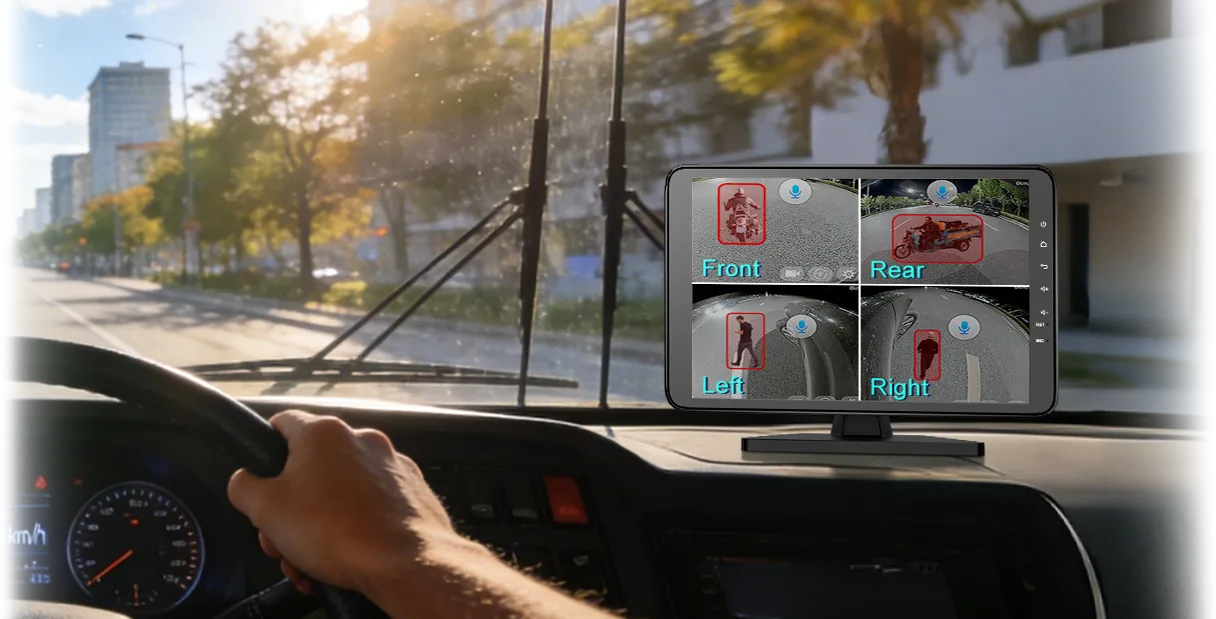
What the bird’s-eye view is
Cameras on the front, rear and sides each record a wide image. The system corrects the distortion, joins the images where they overlap and shows the result as a view from above with the vehicle drawn in the middle. Because the picture is built from flat camera images, it is most accurate on the ground near the vehicle.
What it shows well
| Area | Why it helps |
|---|---|
| Ground close to the vehicle | Lines, curbs and low objects next to the wheels and bumpers are easy to see |
| Both sides of the vehicle | Helps with narrow gates, bays and lane edges at low speed |
| Rear close range | Helps when reversing to a dock or a trailer |
| Slow turns in tight spaces | Shows the gap around the vehicle in one picture |
What it does not show well
| Limit | What it means for the driver |
|---|---|
| Seams between cameras | An object near a join can look bent, doubled or cut. Check the single-camera view |
| Tall objects | Poles, walls and people can look stretched or laid flat because the view is built for the ground |
| Distance beyond a few meters | Detail drops away from the vehicle. Do not use it to judge fast-moving traffic |
| Moving objects | A fast-moving object can cross a seam and change shape |
| Dirty or blocked lenses | A dirty or covered camera leaves a gap in the picture |
| Different vehicle height or load | A raised body or an unusual load can change what the cameras see |
These limits are why the 360 view is an aid. It does not remove blind spots.
Reading the display in practice
- Look at the single-camera view of the side you are moving toward, then at the combined view.
- Watch the seams. If an object disappears or doubles near a join, stop and check directly.
- Do not judge height from the top-down picture. Use mirrors and direct vision for tall objects.
- Check the display before you move off. A dark or frozen image means you should not rely on it.
- Wipe the lenses as part of the walk-around check.
Keep mirrors and procedure
Use the 360 view with mirrors, direct vision and site rules. For pedestrians and cyclists near the vehicle, a blind spot warning can help as an extra layer. It also warns the driver and does not control the vehicle.
For the types and parts of 360 systems, read 360 Camera System for Trucks and Buses. For fitting and calibration, read 360 Camera Installation and Calibration for Trucks. For coverage on semi trucks, read 360 Camera for Semi Trucks: Coverage, Placement and Calibration.
AlwayCare 360 systems to review
| Model | Type | Listed specifications |
|---|---|---|
| M360-1 | 4-channel 3D 360° around-view system | 12/24V; 1920x1080; 512GB; -30℃ to 70℃; warranty 15 months |
| M360-2 | 6-channel 360° camera system with BSD | 12/24V; 1920x1080; 512GB; -30℃ to 70℃; warranty 15 months |
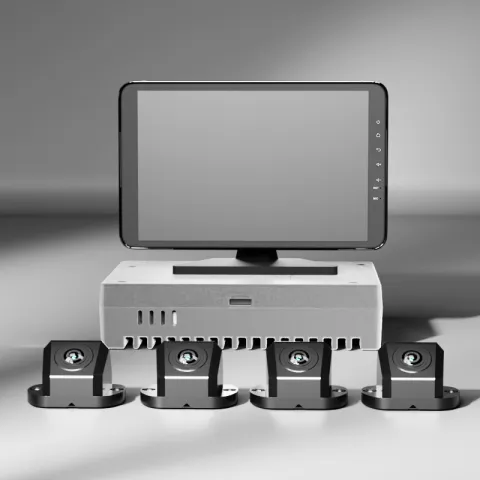 M360-14-Channel 3D 360° Around-View SystemRequest a quote
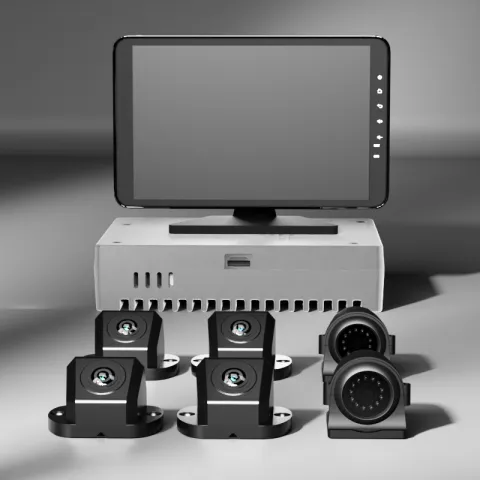 M360-26-Channel 360° Camera System with BSDRequest a quote
Specifications come from the product pages. Your quotation confirms the configuration, channel layout and fitting plan for each vehicle.
Questions about the 360 view
Can a 360 camera show tall objects?
Not reliably. The picture is built for the ground, so tall objects can look stretched. Use mirrors and direct vision for them.
Why does an object look bent near the edge of the picture?
It may sit on a seam where two camera images join. Check the single-camera view.
Can it replace the mirrors?
No. It is an aid for low-speed moves. Keep mirrors and direct vision in your routine.
What should I do when a lens is dirty?
Clean it. A dirty lens leaves a gap or a blur in the picture. Add lens checks to the walk-around.
How many cameras does a vehicle need?
Four cover the sides, front and rear of many vehicles. Long vehicles and trailers may need more. Your supplier can confirm the layout for your vehicle.
Key points
- The bird’s-eye view is a built picture, most accurate on the ground near the vehicle.
- Seams, tall objects and dirty lenses are the common weak spots.
- Check the single-camera view when something looks wrong.
- Keep mirrors and procedure. The 360 view is an aid.
For 360° around-view layouts, camera counts and systems for trucks and buses in one place, see the 360 vehicle camera system solution.