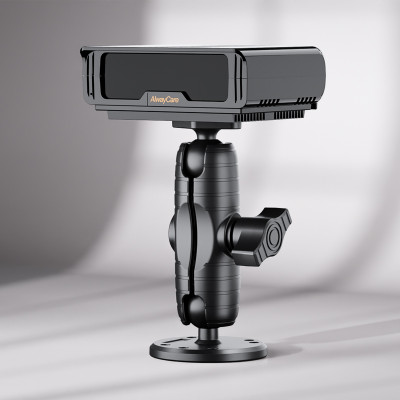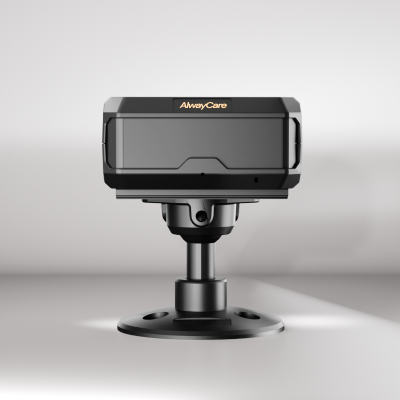


A wired backup camera sends video over a cable — the most stable picture for daily commercial use. A wireless backup camera sends video by radio and still needs power, so it installs faster but trades away some signal stability. Choose wired for trucks and buses in daily service. Choose wireless for trailers, quick retrofits, and temporary setups.
What "wireless" actually means
First, clear up the most common confusion in this search: wireless is not the same as battery-powered.
- Wireless describes how the video signal travels — by radio instead of cable.
- The camera still needs power, from the vehicle wiring or from a battery.
That is why many products on the market are one of three kinds:
- Wired — video and power both over cable.
- Digital wireless — video by radio, power from vehicle wiring.
- Portable — wireless video plus an internal battery.
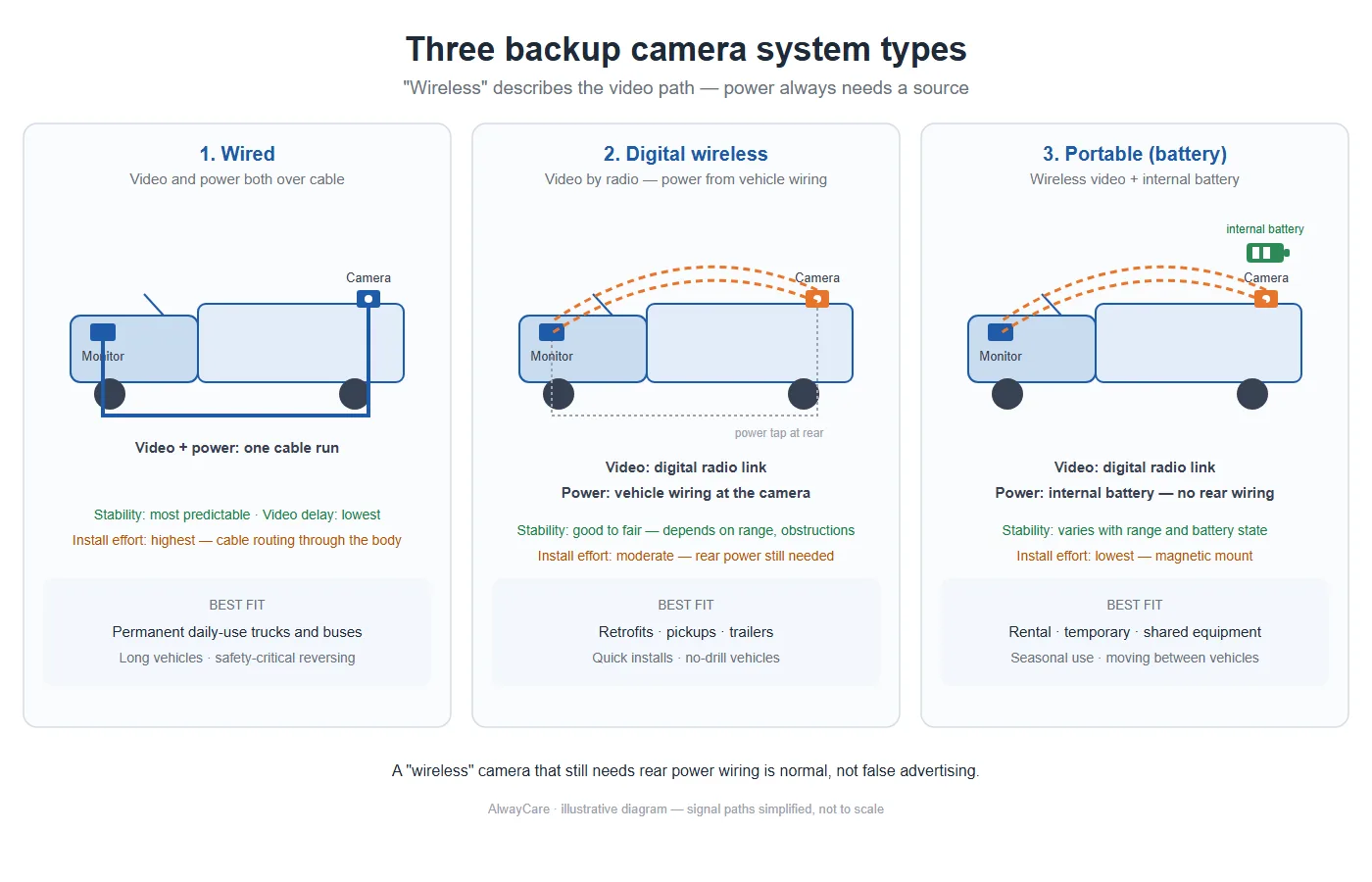
The three types differ by video path and power source.
Knowing which one you are buying prevents most disappointment: a "wireless" camera that still needs rear wiring is normal, not false advertising.
The three types compared
For commercial vehicles, the trade-off is stability versus installation effort.
Regulators treat reversing visibility as serious territory: in the US, FMVSS 111 has required a rearview image on most new vehicles under 10,000 lb since 2018 — the system you pick decides how reliably that view works in daily service.
| Factor | Wired | Digital wireless | Portable (battery) |
|---|---|---|---|
| Video path | Physical cable | Digital radio link | Digital radio link |
| Power | Vehicle wiring | Vehicle wiring at camera | Internal battery |
| Signal stability | Most predictable | Good to fair — depends on range and obstructions | Depends on range and battery state |
| Video delay | Lowest | Low on modern digital kits; varies | Low to moderate; varies |
| Installation effort | Highest — cable routing | Moderate — rear power still needed | Lowest on magnetic mount |
| Best fit | Permanent daily-use trucks and buses | Retrofits, pickups, trailers | Rental, temporary, shared equipment |
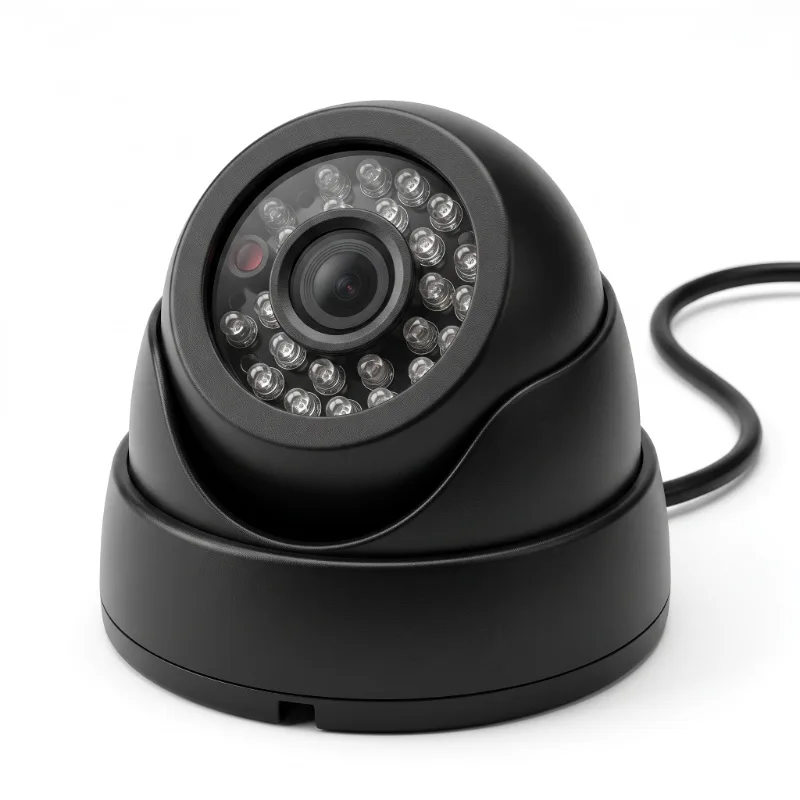
A wired camera with its connector — the cable run is the installation work.
One sentence before you decide: the longer and more metal between camera and monitor, the more a cable earns its cost.
When wired is the right choice
Wired systems suit the vehicles that reverse every working day under load:
- Trucks, buses, and heavy equipment in fixed daily service.
- Long vehicles where the signal path crosses the whole body.
- Safety-critical reversing where the driver depends on a stable, delay-free image.
- Vehicles that keep the same equipment for years.
The installation takes longer — routing cable through the body, protecting it near hinges and moving parts, sealing every connection. That effort buys years of predictable performance.
When wireless makes sense
Digital wireless fits where cabling is impractical or temporary:
- Trailers and detachable bodies, where cable runs between units are awkward.
- Quick retrofits with limited downtime.
- Rental fleets and seasonal equipment.
- Vehicles where drilling or permanent wiring is not allowed.
Two risks to check before you buy:
- Delay. A reversing camera with visible lag is worse than no camera at speed. Modern digital kits keep delay low; cheap analog radios do not. Test before fleet-wide rollout.
- Interference. Long signal paths, metal structures, containers, and busy radio environments degrade any wireless link. Antenna position matters more than advertised range.
A 6-point check before you order
- Vehicle length and the camera-to-monitor distance.
- Whether the rear camera position has a power source.
- How often the vehicle reverses each day.
- Whether the setup is permanent, temporary, or trailer-based.
- What the monitor accepts as input — confirm inputs before mixing systems.
- Whether low delay is required for safe reversing.
Honest limit: a backup camera is an aid, not a replacement for mirrors, direct observation, spotters, or site procedures. Any system — wired or wireless — works only as well as its placement and installation.
Frequently asked questions
Do wireless backup cameras lose signal? They can. Distance, obstructions, antenna position, and radio interference all affect the link. Quality digital wireless kits hold a stable picture on typical vehicles; long or metal-heavy signal paths are the risky cases.
Do wireless backup cameras have delay? Some do. Modern digital wireless systems keep delay low enough for docking and reversing; cheaper analog radios can lag visibly. If the driver reverses at speed in tight areas, test the delay before committing.
Is a wired backup camera always better for trucks? For daily-use trucks and buses, wired is usually the safer default for stability and delay. Wireless earns its place on trailers, retrofits, and temporary setups where cabling is impractical.
Does a wireless camera still need wiring? Yes, in most cases. Digital wireless cameras transmit video by radio but draw power from the vehicle. Only portable battery models run without rear wiring — and they need charging.
Can I mix wired and wireless cameras on one monitor? Often yes — many commercial monitors accept multiple inputs. Confirm the monitor's input types and count before ordering, or ask us to check compatibility for your layout.
Choose the right transmission for your vehicles
Send us your vehicle types, length, and where the cameras need to go — we will recommend wired or wireless per vehicle, with a monitor and cable plan that matches.
- Browse our Vehicle Camera and Wireless Camera ranges, plus Vehicle Monitors with multi-camera inputs.
- Choosing camera protocols next? Read AHD vs IP Vehicle Cameras.
- Adding sensors alongside cameras? See Ultrasonic Reversing Sensors for Commercial Vehicles.