Heavy Duty Truck ADAS & Blind Spot Detection (BSD): Complete Integration & Safety Guide
A fully loaded 40-ton commercial vehicle traveling at 80 km/h requires almost twice the stopping distance of a passenger car. Combined with massive physical blind spots surrounding heavy vehicle cabs—spanning up to several meters along the passenger side, front bumper, and rear trailer—commercial trucks represent an outsized risk to Vulnerable Road Users (VRUs) such as pedestrians and cyclists.
Global regulatory mandates, including London's Direct Vision Standard (DVS 2024 Progressive Safe System) and UNECE Regulations R151 (BSIS) and R159 (MOIS), have turned active blind spot detection and forward collision warning system installations into mandatory operational requirements.
1. The Two-Tier Active Safety Architecture for Commercial Trucks
To eliminate preventable crashes, modern commercial fleets implement a synchronized dual-layer active protection envelope using an integrated ADAS System:
Tier 1: Forward Road Trajectory Protection (ADAS)
- Forward Collision Warning (FCW): High-precision machine vision calculates Time-to-Collision (TTC). When TTC drops below 2.7 seconds, visual and acoustic warnings sound, giving truck drivers the critical fraction of a second needed to brake safely.
- Lane Departure Warning (LDW): Tracks road lane markings at high speeds, alerting the driver if the heavy vehicle begins drifting out of its lane without turn signal engagement.
- Headway Monitoring Warning (HMW): Constantly measures following buffer in tenths of a second, preventing dangerous tailgating.
Tier 2: Perimeter VRU Blind Spot Detection (AI BSD)
- Deploying a Rugged truck blind spot system: Unlike traditional ultrasonic sensors that beep indiscriminately at lamp posts, guard rails, and fences, AlwayCare AI BSD Camera units utilize neural networks trained specifically on human pedestrians, cyclists, and e-scooters.
- Dynamic Two-Stage Warning:
- Stage 1 (Advisory Warning): When a cyclist enters the lateral blind zone, an in-cab A-pillar visual LED illuminates steadily.
- Stage 2 (Imminent Hazard): If the driver initiates a turn toward the cyclist, the system escalates to rapid flashing visual strobes and high-decibel acoustic alarms.
2. Sensor Technology: AI Vision vs. 77GHz Millimeter-Wave Radar
Fleet safety directors frequently evaluate a commercial vehicle blind spot camera versus radar sensors for blind zone safety:
| Feature Matrix | AI Vision Cameras (CC1004-BSD) | 77GHz Radar Sensors (R360) | Sensor Fusion (Vision + Radar) |
|---|---|---|---|
| VRU Classification | Exceptional (Distinguishes human vs pole) | Moderate (Measures velocity and range) | Maximum Reliability (Zero false alarms) |
| Adverse Weather | Subject to lens mud/snow occlusion | Penetrates torrential rain, fog, and dust | All-Weather 24/7 Redundancy |
| Driver Visual Feedback | Live video feed on in-cab display | Acoustic beeps / LED indicators | Video overlay with dynamic bounding boxes |
3. Meeting London DVS 2024 & UNECE R151 / R159 Standards
Operating heavy commercial vehicles in metropolitan areas requires meeting rigorous safety compliance criteria:
- Blind Spot Information System (BSIS - UNECE R151): Detects cyclists moving parallel along the nearside and warns the driver before an impact occurs.
- Moving Off Information System (MOIS - UNECE R159): Detects pedestrians and cyclists in the critical forward blind spot immediately in front of the vehicle when moving from a standstill.
- London DVS PSS: Fleets entering Greater London must install camera monitoring systems, blind spot sensors, and external left-turn audible alarms.
4. AlwayCare ADAS & Blind Spot Safety Hardware
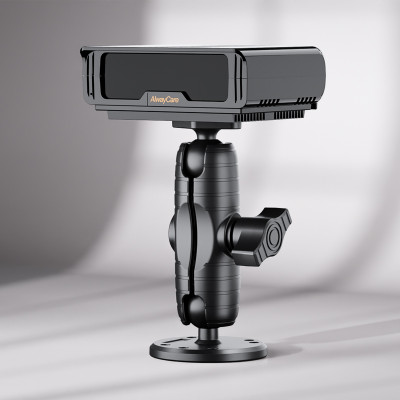
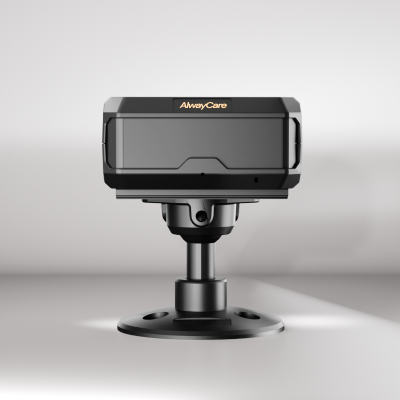
Heavy-duty side and rear camera featuring embedded deep learning NPU for pedestrian, cyclist, and scooter recognition with IP69K waterproof housing.
High-capacity vehicle video telematics computer supporting simultaneous ADAS forward collision warnings and dual-side AI blind spot cameras.
Compact windshield-mounted commercial unit combining forward ADAS collision warning with driver fatigue tracking and lateral blind spot alerts.