AI Vision for Commercial Fleet Safety: Detection, Coaching, Claims and Rollout
Fleet Safety Guide
Introduction
AI vision is increasingly treated as a baseline expectation for commercial fleets — the layer that watches the road and the driver continuously, flags risk in the seconds before a crash, and produces a record afterward. In practical terms, AI vision means camera-based systems that use computer vision to detect driver state, the vehicle's surroundings, and unsafe behaviors, then act on what they find.
The word "act" carries most of the weight. A camera that records a hard brake and files it away has produced evidence. A camera that sounds an alert in the cab, routes the clip to a supervisor, and feeds a coaching conversation has produced prevention.
This guide works through the whole chain:
- What the systems detect.
- How alerts and coaching convert detection into fewer events.
- What changes for claims and litigation.
- How a mid-size fleet should evaluate and roll out the technology.
- How to handle privacy and driver acceptance.
- How the same architecture applies in school bus, transit, mining, and forklift operations.
One caution applies throughout. The headline crash-reduction figures in this field come from a small number of studies with specific designs, specific coaching protocols, and specific vehicle populations. They are worth knowing, and they are worth reading at their actual scope rather than as a promise about any particular deployment. The sections below keep each number attached to its source and its limits.
What AI Vision Detects in a Commercial Vehicle
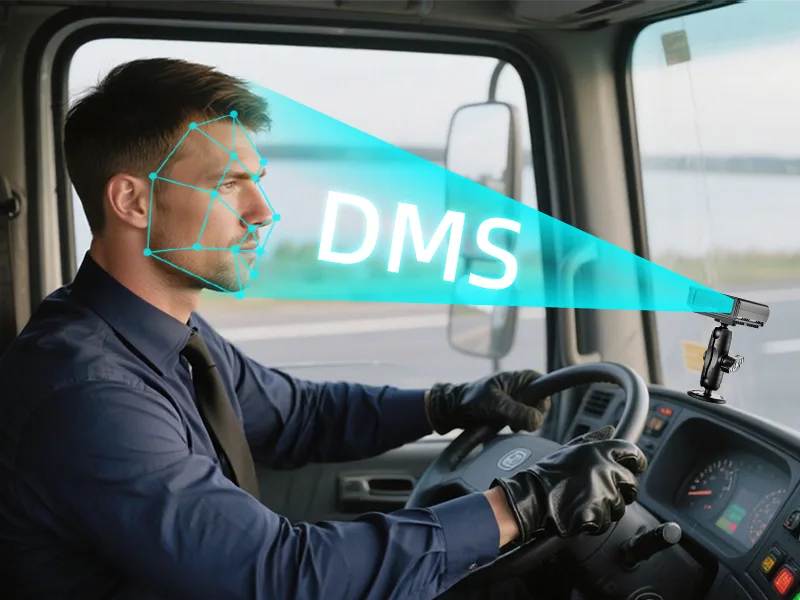
Commercial systems generally pair two camera orientations, and the distinction matters because each answers a different question.
| Camera | Question it answers | Typical categories |
|---|---|---|
| Driver-facing | What is the person behind the wheel doing? | Distraction and inattention; handheld phone use; signs of drowsiness or fatigue such as yawning or prolonged eye closure; seat belt non-use. Some systems also detect eating, drinking, and other in-cab tasks |
| Road-facing | What is happening around the vehicle? | Forward collision risk; lane departure; following distance; pedestrian and cyclist proximity; blind-spot presence |
A Future of Privacy Forum guide on fleet camera systems describes how this works in practice for distraction: the system learns an individual driver's natural head position as a baseline for engaged driving, then flags deviations from it.
Following distance is a useful illustration of how configurable these systems are. The FPF guide describes algorithms that monitor how long a vehicle has held an unsafe gap, trigger an in-cab audio alert when that time exceeds a threshold, and upload the event for coaching, with fleet managers able to lengthen or shorten the threshold.
The mechanism that turns continuous monitoring into usable data is the event trigger. The AAA Foundation's analysis describes the standard pattern: the system monitors whenever the vehicle is on, and when a threshold is exceeded — a braking event above 0.3 g is the example given — it saves a predefined window, such as 30 seconds before and 60 seconds after, to memory. Some systems then transfer saved events wirelessly to a manager daily.
Two outputs come out of that trigger, and conflating them causes bad purchasing decisions. A system strong on one and weak on the other is a partial solution.
| Output | What it is | Who acts | Effect |
|---|---|---|---|
| Real-time in-cab alert | Light, tone, or voice prompt | The driver, in the moment | Changes behavior now |
| Uploaded event record | Footage and kinematic data | A supervisor, later | Changes behavior over weeks through coaching; doubles as evidence after an incident |
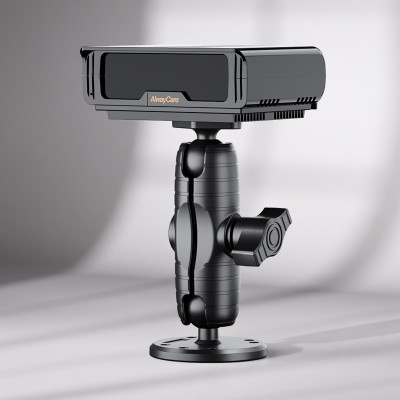
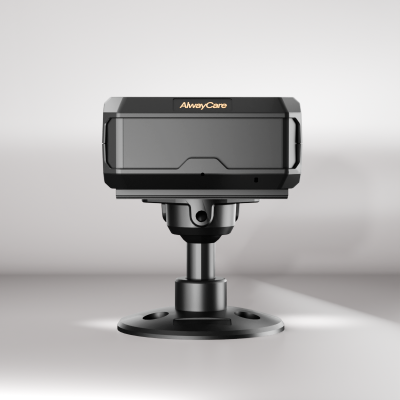
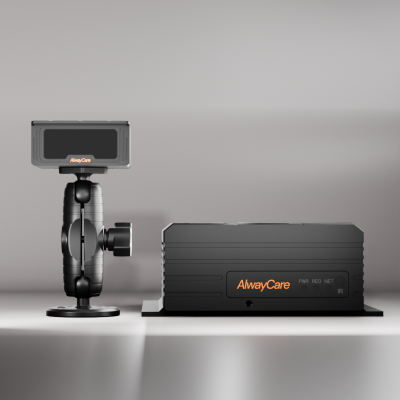
The hardware side of this pairing is a driver-facing DMS camera plus a road-facing ADAS camera, typically recorded by an MDVR. See the anti-collision solution guide, the driver fatigue and distraction guide, and the vehicle video surveillance guide for how each layer is built.
What systems detect varies considerably by product, and so does the degree to which thresholds can be tuned to a fleet's operation. A carrier hauling hazardous materials on two-lane roads and a transit agency running fixed downtown routes have different definitions of an unsafe following distance, and the configuration should reflect that.
How Detection Becomes Prevention: Alerting and Structured Coaching
Detection changes nothing on its own. The evidence on behavior change points to two mechanisms working together, and the clearest study of the pair isolates them deliberately.
The headline figures sit on different scales, so they are kept apart here. None of them is a crash-rate guarantee for a particular fleet.
| Figure | Source | What it measures | Nature |
|---|---|---|---|
| 75.5% | FMCSA-sponsored Hickman and Hanowski study | Reduction in severe safety-related events under an active coaching protocol | Measured |
| 38.1%–52.2% | AAA Foundation summary of empirical estimates | Large-truck safety-critical events the systems "may have prevented" | Estimated |
| 20% fatal / 35.5% injury | AAA Foundation | Share of large-truck crashes the driver could have acted to prevent or mitigate | Modeled |
The study, sponsored by the Federal Motor Carrier Safety Administration and conducted by Hickman and Hanowski, instrumented 100 tractor-trailers with video-based event recorders and collected data for 17 consecutive weeks of normal revenue-producing deliveries.
| Phase | Weeks | Feedback light | Manager access |
|---|---|---|---|
| Baseline | First 4 | Disabled | None. Managers had no access to the recordings |
| Intervention | Following 13 | Activated | Managers gained access to the events and followed the vendor's coaching protocol with drivers where needed |
As summarized by Soccolich and Hickman, the FMCSA study found the program reduced severe safety-related events by 75.5 percent.
That design is worth pausing on, because it explains what the number does and does not mean. The 75.5 percent reduction was measured under an active coaching protocol with management follow-through. The same analysis states plainly that simply installing an event recorder without following the program will not produce those results. The technology was necessary; the coaching was what made it work.
The AAA Foundation's benefit-cost analysis puts the broader evidence in perspective. Its literature review identified only two empirical studies evaluating crash reductions from video-based onboard safety monitoring, alongside eight case studies published on vendor websites.
Those two empirical studies found the systems "may have prevented":
- 38.1% to 52.2% of large-truck safety-critical events.
- 20% of large-truck fatal crashes.
- 35.5% of large-truck injury crashes.
The phrase "may have prevented" is the researchers' own, and it is accurate: these are modeled estimates of crashes in which the truck driver could have done something to prevent or mitigate the outcome, not counts of crashes that demonstrably did not happen. The AAA Foundation also cautions that the efficacy rates used in its analysis may not represent the functionality of the current generation of systems.
NIOSH's work adds the practical layer. Its study found that an in-vehicle monitoring system combining in-vehicle driver feedback with supplemental supervisory coaching, using driver- and outward-facing video, improved outcomes.
NIOSH's guidance for employers is concrete:
- Communicate clear and consistent expectations for safe driving before the program begins.
- Present the system as a positive way to build and sustain safe habits.
- Set realistic goals, such as a 50 percent reduction in harsh braking events over a year.
- Recognize achievement with a small reward or team recognition.
The variable fleets actually control is coaching quality. A program that generates thousands of unreviewed clips has automated documentation, not safety. A program where supervisors review a manageable set of events, talk with drivers promptly, and follow through on goals is where the reductions in the studies came from.
What Changes for Liability, Claims, and Insurance
After a crash involving a commercial vehicle, the central problem is often not the law but the facts: two accounts, an emotional scene, and no neutral record. Video changes that, and the insurance industry's own commentary is more specific than most fleets expect.
The American Transportation Research Institute's 2023 report surveyed legal and insurance experts about cases where driver-facing camera footage was available. Those figures describe what experts report — they are survey responses, not a controlled comparison of outcomes with and without cameras, and they should be read that way.
| Outcome when driver-facing footage is available | Share of cases (expert survey) |
|---|---|
| Driver exonerated in insurance claims | 52% |
| Driver exonerated in litigation | 49% |
| Settlement rather than trial | 86% |
The same report documents a striking adoption gap: as of 2023, only 32 percent of surveyed fleets used driver-facing cameras, compared with 72 percent using road-facing cameras. The evidence of legal benefit is strongest precisely where adoption is lowest.
AXA XL's insurer perspective explains the mechanism. When a large commercial vehicle collides with a smaller passenger vehicle, it is often simply assumed the truck driver made a mistake.
| Situation | Effect |
|---|---|
| Footage available | An unbiased narrative of what happened before, during, and immediately after the incident, which counters that assumption with a record |
| No video | Collisions can become a "word versus word" dispute that turns into a long legal battle requiring expert testimony, with costs in the tens of thousands of dollars |
| Footage shows the driver at fault | The less comfortable side, which AXA XL also notes: the company has reason to settle promptly rather than litigate a weak position |
On premiums, the insurer is direct: most commercial insurance companies have not been able to offer premium credits or discounts for camera usage. The savings come mainly from claims defense, fraud reduction, and the training value of correcting unsafe driving. Fleets should confirm their own carrier's position rather than build a business case on an assumed discount.
The stakes are rising. The FPF guide, citing research on verdicts against commercial carriers, reports that in lawsuits involving large commercial vehicles where the verdict exceeded $1 million, the average verdict rose from $2.3 million in 2010 to $22.3 million in 2018. In that environment, a clear video record is less a convenience than a form of financial protection.
How a 50–500-Vehicle Fleet Should Evaluate, Pilot, and Roll Out AI Vision
For a fleet running 50 to 500 vehicles, the technology decision is manageable; the program design around it is where rollouts succeed or stall. A staged sequence keeps both in view.
- Define the problem and the success metrics first. Before taking vendor meetings, identify the behaviors driving your claims — harsh braking, close following, distraction, seat belt non-use — and pull your own baseline: event rates if you already have telematics, claims frequency and severity, and the specific routes or depots where incidents cluster. A fleet that cannot state what success looks like in numbers will end up measuring whatever the vendor's dashboard displays.
- Shortlist against requirements, not demonstrations. The requirements worth writing down include the detection categories you actually need, how configurable alert thresholds and in-cab feedback are, integration with your existing telematics and back-office systems, data-retention and access controls, the installation model, and total cost including monthly service fees. On cost, the AAA Foundation's analysis obtained figures from one vendor: hardware including installation in the range of $300 to $750 per truck, with monthly service fees of $20 to $60. Its advisory panel used $525 and $40 as base values for modeling. Treat these as planning reference points from that analysis, not as current market prices.
- Run a bounded pilot on a representative subset. Mirror the baseline-and-intervention logic of the FMCSA study: a defined baseline period with feedback disabled or coaching not yet started, followed by an intervention period with alerting and coaching active. Include a mix of routes, shifts, and drivers rather than the newest trucks and most cooperative operators. Predefine what you will compare — events per thousand miles, by category — so the pilot produces an answer rather than an impression.
- Review the pilot with drivers and supervisors before scaling. They will see things in the data that management misses: alerts that fire on legitimate maneuvers, thresholds set wrong for a route, footage that is hard to review. Fixing those before a fleet-wide launch costs far less than fixing them after.
- Phase the rollout against coaching capacity. Coaching labor is a real cost, and the AAA Foundation's sensitivity analysis found that because equipment costs for these systems are relatively low, variation in training hours had a comparatively large effect on total program cost. If supervisors cannot absorb the review workload, adding vehicles only adds unreviewed video. Plan the coaching hours per driver per week before committing the next tranche of installs.
One evidentiary point deserves emphasis. Vendor case studies published on vendor websites are marketing, however impressive the percentages. The AAA Foundation counted eight such case studies alongside two empirical studies and treated them as a separate category for good reason. The most relevant evidence for your operation is your own pilot data, collected under your routes, your drivers, and your coaching protocol.
Privacy, Data Retention, and Driver Acceptance
Driver-facing cameras raise a legitimate question, and treating it as a communications problem rather than a design problem is the usual mistake. Privacy choices made at procurement determine how much resistance the program meets later.
The legal starting point is narrower than many assume. As the FPF guide explains, workplace monitoring is fairly commonplace and data practices are primarily governed by company policies rather than statutes. But that general rule has exceptions that depend on what the system captures and where it operates.
| Rule | Where | What it requires |
|---|---|---|
| Biometric Information Privacy Act | Illinois | Obligations on employers processing biometric information in Illinois, including obtaining consent or a written release before collection |
| Biometric information law | Texas | Regulates how biometric information may be used for a commercial purpose |
| Audio recording consent | California and Maryland | Generally all parties must consent to an audio recording |
| Audio recording consent | Other states | Only one party must consent |
A fleet operating across state lines may be subject to several regimes at once.
Outside the United States the frame differs again: in the EU, in-cab video of identifiable drivers is personal data under the GDPR, which typically calls for a documented lawful basis, a data protection impact assessment, and clear retention limits. Check the rules of every country where the vehicles operate.
The design practices that reduce both legal exposure and driver friction are well established. The FPF guide recommends:
- Privacy by design and privacy impact assessments.
- Data minimization.
- Secure storage.
- Transparency with drivers about what is collected and how it is used.
- Role-based access controls.
- Encryption on device, in transit, and in cloud storage.
- Written contracts with third-party providers.
Data minimization is the most consequential in daily operation: rather than uploading continuously, configure the system to transmit only when a harsh or unsafe driving event is detected.
That configuration choice also answers the "big brother" concern directly.
AXA XL notes that, depending on the system chosen, video is typically transmitted only when harsh driving conditions or an unsafe act is detected or when a crash occurs, and that most camera systems enter a sleep mode when the vehicle is idling or off.
The qualifier matters: this is a function of configuration, not a universal property of the category. A fleet that enables continuous streaming has chosen differently, and should say so.
Acceptance is built before launch. NIOSH's guidance is to:
- Communicate clear and consistent expectations for safe driving to everyone in the organization before the program begins.
- Explain the consequences of risky behavior.
- Present the system as a positive way to create and sustain safe habits rather than a surveillance tool.
AXA XL adds a practical step: run the pilot with multiple drivers so they can see the setup, ask questions, and make suggestions. Hold discussions one-on-one or in small groups where questions get real answers.
Expect more resistance to driver-facing cameras than to road-facing ones. The ATRI adoption gap — 32 percent versus 72 percent — is a reasonable proxy for how drivers and fleets have weighed the tradeoff, and a fleet introducing in-cab cameras should plan a longer runway for the conversation.
AI Vision Beyond Long-Haul Trucking: School Bus, Transit, Mining, and Forklift Fleets
The detection-and-response architecture described above is not specific to long-haul trucking. What changes by segment is the hazard profile and the regulatory frame, and each segment's evidence should be kept with that segment.
Mining. MSHA reports the following for 2025 powered haulage accidents, involving equipment such as shuttle cars, locomotives, and front-end loaders. The two measures use different denominators, so the shares are not directly comparable to each other.
| MSHA 2025 measure | Powered haulage | National total | Share |
|---|---|---|---|
| Mining fatalities | 13 | 33 | 39% |
| Nonfatal injuries | 426 | 4,792 | 9% |
The agency notes that surface mining vehicles can be several stories tall and capable of destroying smaller vehicles that cannot be seen by the operator. Alongside traffic controls, training, and distraction avoidance, collision warning and avoidance systems can help.
MSHA's 2023 final rule requires mine operators to maintain written safety programs for surface mobile equipment, developed with input from miners and their representatives and identifying hazards and risks.
AI vision fits into that program as a control for visibility and proximity hazards — not as a substitute for the program itself.
Forklifts and industrial sites. OSHA frames powered industrial truck hazards around specific failure modes:
- Trucks inadvertently driven off loading docks.
- Lifts falling between docks and an unsecured trailer.
- Workers struck by a lift truck.
- Falls from elevated pallets and tines.
Retail and warehouse environments present particular pedestrian-safety challenges. The regulatory floor is training and certification:
- OSHA requires that each operator be competent, as demonstrated by successful completion of the training and evaluation specified in 29 CFR 1910.178(l).
- It is a violation of federal law for anyone under 18 to operate a forklift, or for anyone over 18 who is not properly trained and certified.
AI vision — pedestrian detection, proximity alerts, blind-spot coverage on a vehicle with notoriously poor sightlines — supplements that requirement. It does not replace it.
School buses. The passenger-adjacent risks are different in kind:
- The loading and unloading zone.
- Students crossing in front of the bus.
- Stop-arm violations by passing motorists.
These are detection categories an AI vision system can address — pedestrian proximity at stops, stop-arm events captured for later enforcement or education — but the evidence base for crash reduction in this segment is far thinner than for large trucks. A district should treat its own pilot data as the primary evidence.
Transit. Fixed-route buses face pedestrian proximity at stops, boarding and alighting risk, and the same driver-fatigue and distraction exposures as any commercial operation, plus close-quarters maneuvering in dense traffic. The detection categories transfer; the thresholds and coaching priorities should be set for transit duty cycles rather than highway miles.
Across all four segments, the honest position is that the strongest published effectiveness evidence concerns large trucks. The architecture is portable; the numbers are not. Each segment should validate in its own operation rather than assume another segment's results.
Questions About AI Vision in Commercial Fleets
What is AI vision in a commercial fleet?
It is a camera-based system that uses computer vision to detect driver state, the vehicle's surroundings, and unsafe driving behaviors. Most systems use two cameras — one facing the road, one facing the driver — and operate on an event-trigger model: continuous monitoring, with a predefined window of footage saved whenever a threshold such as a hard-braking event is exceeded.
Does AI vision actually reduce crashes, or just record them?
Studies associate video-based monitoring, combined with coaching, with real reductions in safety-critical events. The FMCSA-sponsored Hickman and Hanowski study found a 75.5 percent reduction in severe safety-related events under a specific coaching protocol, and the AAA Foundation summarized empirical estimates that the systems "may have prevented" 38.1% to 52.2% of large-truck safety-critical events, 20 percent of fatal crashes, and 35.5 percent of injury crashes. Those are modeled, study-specific figures, not a guarantee for any deployment.
Do driver-facing cameras help in insurance claims and lawsuits?
ATRI's 2023 report, based on surveys of legal and insurance experts, found that driver-facing camera footage, when available, exonerates drivers in 52 percent of insurance claims and 49 percent of litigation cases, and leads to settlements in 86 percent of cases rather than trial. Note that most commercial insurers have not offered premium credits or discounts for camera usage, according to AXA XL, so the value shows up in claims defense and fraud reduction rather than in premium.
How long should a pilot run before rolling out fleet-wide?
Long enough to establish a credible baseline and long enough to see coaching take effect. The FMCSA study used a 4-week baseline with feedback disabled followed by a 13-week intervention — a useful example design, not a requirement. What matters more is a representative vehicle and driver mix and predefined metrics, so the pilot answers a question instead of producing an anecdote.
Is it legal to record drivers with in-cab cameras?
Workplace monitoring is largely governed by company policy, but state law varies. Biometric privacy statutes such as Illinois' BIPA and Texas' rules on commercial use of biometric data can apply depending on what the system captures, and audio recording consent laws differ — California and Maryland generally require all-party consent, while other states require one party. Conduct a privacy impact assessment and get legal review for the states you operate in.
Can AI vision replace driver training and certification?
No. For forklifts, OSHA requires that each operator be trained and evaluated as specified in 29 CFR 1910.178(l), and operating without proper training and certification is a violation of federal law. AI vision supplements required training and structured coaching; it does not substitute for either.
Does AI vision apply to school buses and transit, not just trucks?
Yes, with segment-specific priorities: stop-arm and boarding-zone awareness for school buses, pedestrian and passenger-adjacent risk for transit. The published effectiveness evidence is strongest for large trucks, so each segment should validate results in its own pilot rather than assume another operation's numbers transfer.
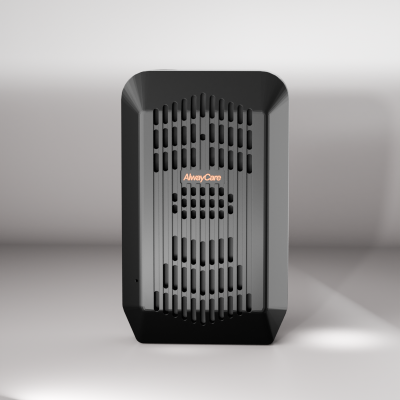
AlwayCare DMS and recorder options
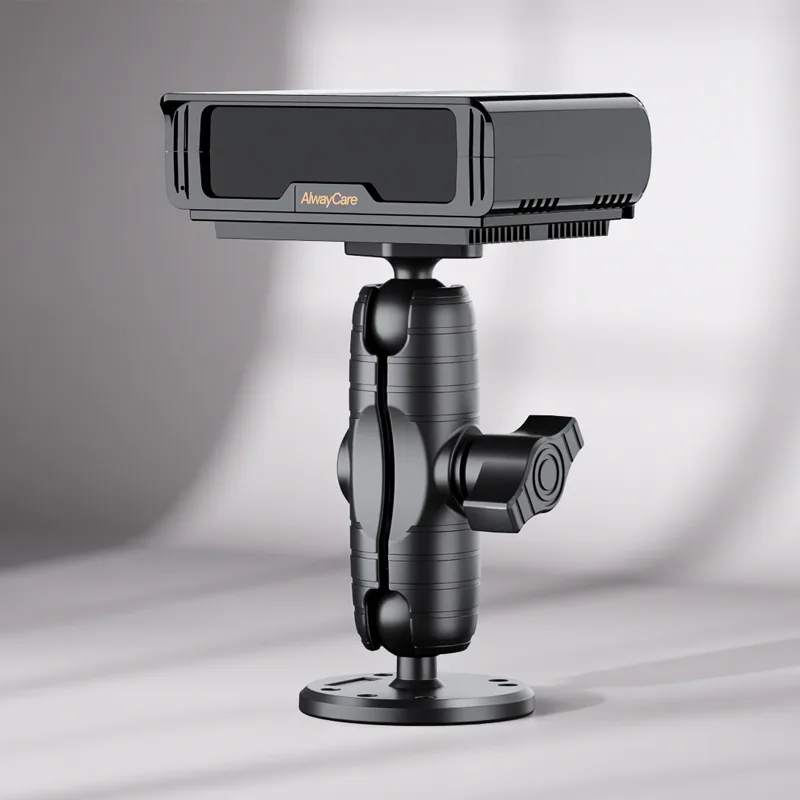
| Model | Form | Listed functions |
|---|---|---|
| MR830 | All-in-one DMS, 1080p recording, 12/24V | Driver alerts with optional ADAS, BSD, 4G and fleet-platform functions |
| MR910-D | DMS with multi-channel mobile DVR, 12/24V | DMS driver alerts, multi-channel recording, GPS/Beidou, 4G or Wi-Fi |
Functions vary by model and firmware. Confirm the exact alerts, camera position and platform on the product page or in your quotation.
Key Takeaways
AI vision earns its place in a fleet when three things are true at once: detections reach the driver in time to matter, supervisors turn recorded events into coaching that drivers experience as support rather than punishment, and the data collected is limited, secured, and explained. Remove any one and the system degrades — into a silent recorder, an ignored dashboard, or a grievance.
The chain runs from detection to prevention to protection.
- Prevention. In-cab alerts and structured coaching are where the behavior change happens, and the FMCSA-sponsored study's 75.5 percent reduction in severe safety-related events came with an active coaching protocol, not from installation alone.
- Evidence. The AAA Foundation's modeled estimates — that the systems may have prevented 38.1% to 52.2% of safety-critical events — are best read as evidence of real potential under real programs, with the Foundation's own caveat that current-generation systems may perform differently.
- Protection. After an incident, the same footage that supported coaching becomes the unbiased record that ATRI's surveyed experts say exonerates drivers in roughly half of claims and litigation, even though most insurers still do not discount premiums for it.
The rollout discipline is unglamorous and decisive: define metrics before vendors, pilot on a representative subset with a real baseline, review results with the people who will live under the system, and phase installation against coaching capacity rather than against a purchase order.
The evidence on current-generation systems is still developing, and it will keep developing. That is an argument for measuring in your own operation, not for waiting. The concrete next step is to write down your success metrics and pilot scope — target behaviors, baseline event rates, claims data, the vehicle and driver mix — before you take the first vendor meeting.
For fleets building this stack, the related guides cover the hardware layers: anti-collision, driver fatigue and distraction, vehicle video surveillance, in-vehicle cameras, fleet management and fleet safety regulations. To discuss a pilot, send an inquiry.
For collision-warning equipment options in one place, see the anti-collision solution for commercial vehicles.
For driver monitoring options in one place, see the driver monitoring solution for fatigue and distraction alerts.
For recorder and video platform options in one place, see the vehicle surveillance video solution.
For the rules behind these systems, see the fleet safety regulations guide.